 ChinaBuddy
How to Use the Metro and Buses in China
Use metro and bus services in China: choose a ticket or transport code, find the right direction, change lines and handle gate problems.
IN THIS GUIDE
For your first journey, choose a route with a manageable number of changes, then use the ticket or payment method supported in that city. A metro transport code, a merchant payment code and a train booking are different things.
Save your destination station and its Chinese name before setting off. Check the final exit and walk to the address, not only the coloured line on a network map.
Choose how you will pay
Ask Buddy ↗| Method | What to do | What can go wrong |
|---|---|---|
| Single-journey ticket | Buy for your destination from an operating machine or service counter | Payment method, machine language or ticket format may differ |
| Local transport card | Check that it covers your city and intended services | A card or tourist product may have separate validity and refund terms |
| Transport QR code | Select the correct city's metro or bus service in the supported app | Account eligibility, activation and linked payment can fail |
| Contactless bank card | Use only a card and gate explicitly supported by the local operator | Card eligibility differs; airport rail may have its own arrangements |
Beijing and Shanghai publish guidance on eligible overseas bank-card use. That does not make every card usable on every transport system in China. Check the operator's instructions and the symbols on the machine or gate.
With contactless travel, use the same physical card or the same supported device token for the complete journey. Switching between a phone and the associated plastic card can be treated as switching payment credentials. If unsure, ask staff which method to use before entering.
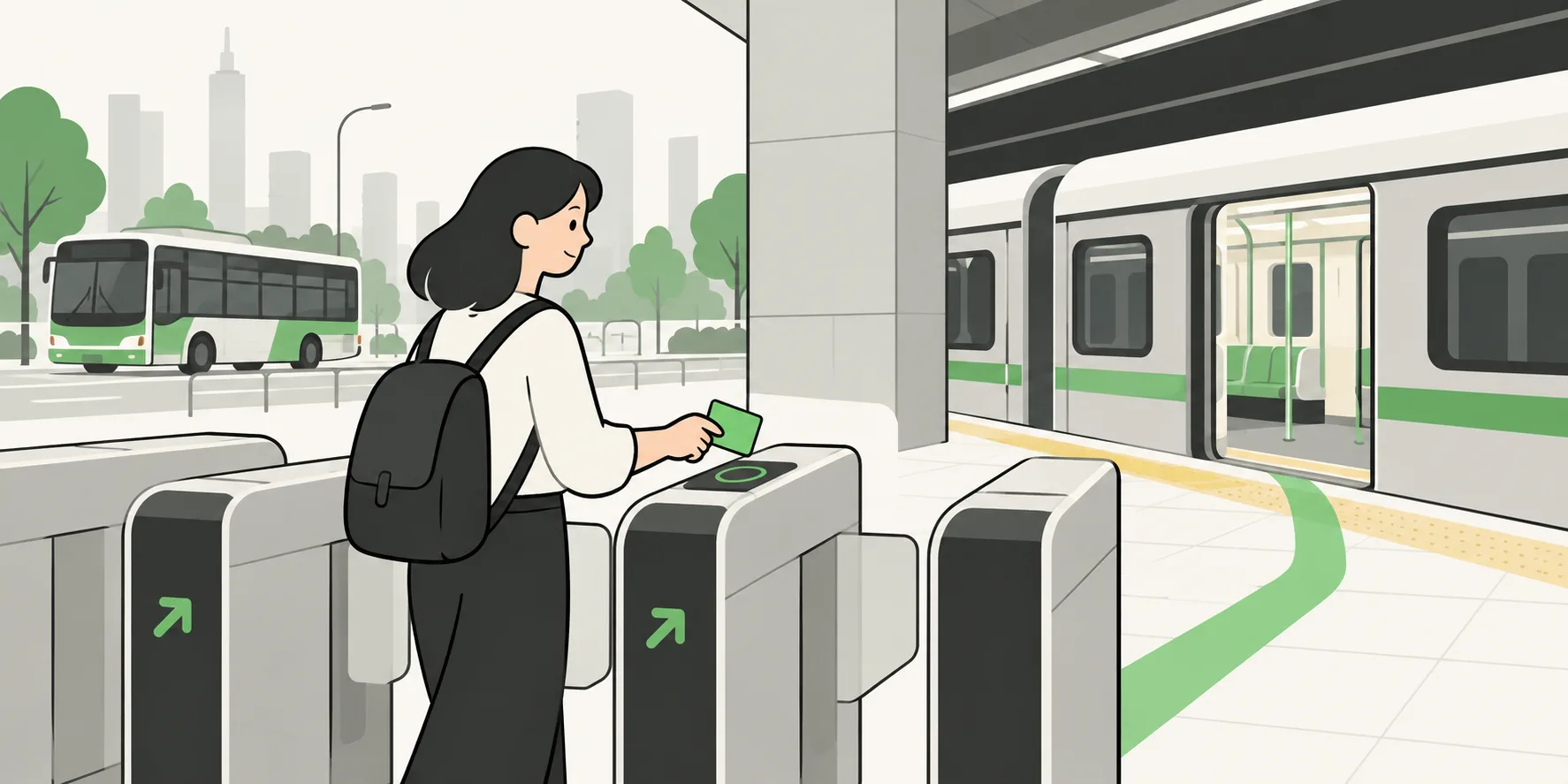
Illustrative public transport: confirm the local payment method, direction and exit before beginning the journey.
Optional metro walkthrough by Lyn | China Travel Made Simple. It covers payment choices and later station steps; card acceptance varies by city, and the video is not a bus-boarding tutorial.
Metro payment options, from 2:50Optional video · YouTube
YouTube may not load in mainland China. You can follow the written steps in this guide.
Ask BuddyBuy a ticket without a working app
Ask Buddy ↗Look for the machine's language option, select the destination and review the number of tickets and total before paying. If your card or cash is not accepted by that machine, ask the service counter for a supported alternative.
Do not buy for an intermediate change of line unless the operator's instructions require it. On a normal connected metro journey you select the final station; special airport or suburban rail services may be separately ticketed.
Keep the ticket until you have completely exited. Depending on the city, you may tap, scan or insert it into a slot. Follow the diagram on the gate rather than pushing through behind another passenger.
Enter and find the correct platform
Ask Buddy ↗- Check the station entrance name and any closure notice.
- Follow the local security process with your bags.
- Use the correct ticket reader or transport-code scanner at the gate.
- Find the line number and direction, usually identified by a terminal station.
- Check that your destination appears along that direction before boarding.
Different services can share a large transport hub without sharing one paid area. Look for the exact service name. A high-speed railway station, metro station and airport rail platform are not interchangeable boarding points.
If you board in the wrong direction, get off at the next suitable station and follow the operator's transfer instructions. Do not cross tracks or use a staff-only passage.
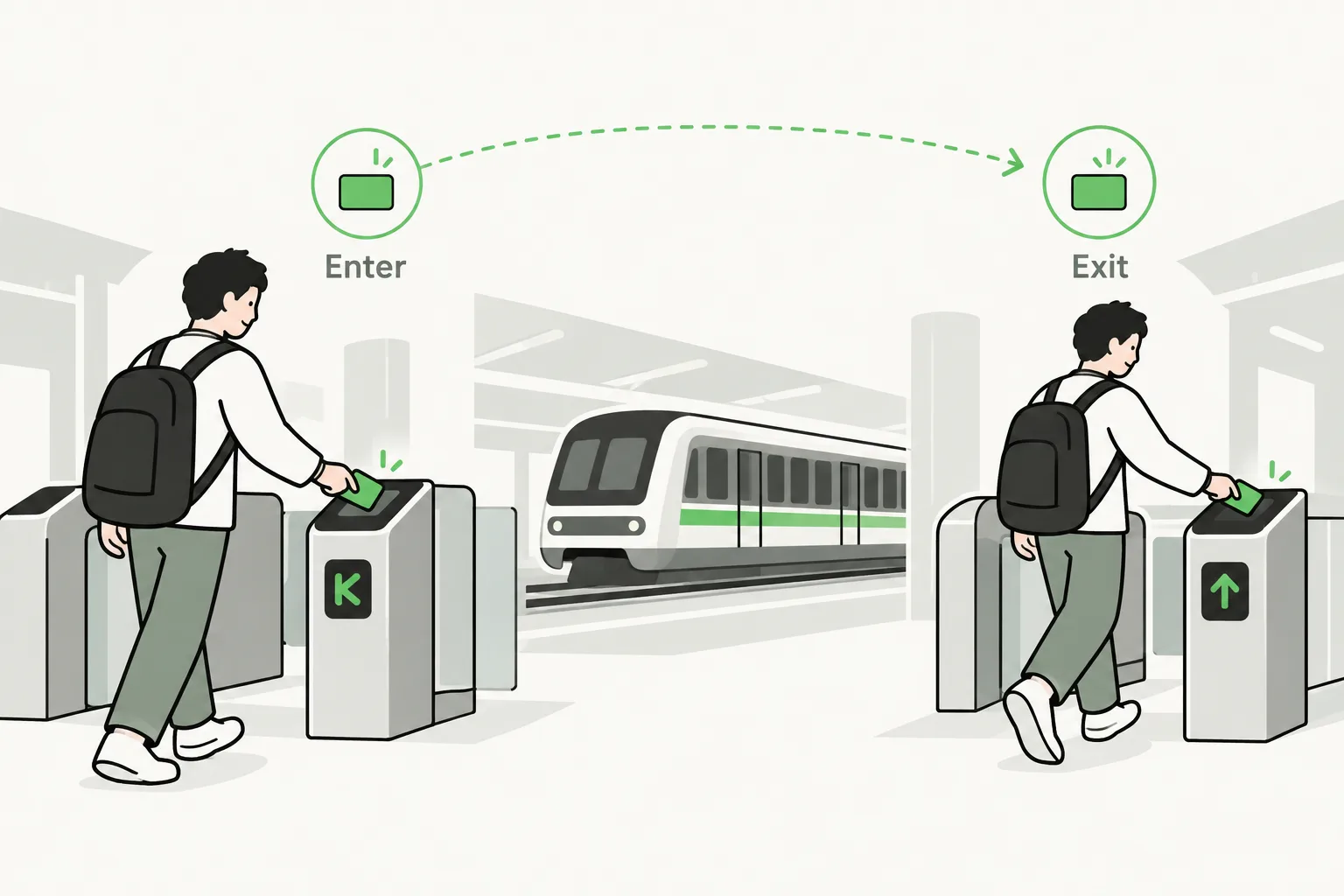
Schematic metro entry and exit: use the same supported credential throughout. Do not switch between a card, phone and another ticket at the exit.
For a visual supplement, the metro walkthrough reaches station security and riding at 5:45.
Change lines and choose the useful exit
Ask Buddy ↗Follow transfer signs inside the station. A change can involve a substantial walk, stairs or an elevator route that differs from the shortest path. Give yourself more time with luggage or a mobility aid.
Before leaving the last station, check which exit is closest to the actual address and has the access you need. Being on the wrong side of a major road can make an apparently short final walk difficult.
Useful request: 请问去这个地址从哪个出口出去? — “Which exit should I use for this address?” Show the address as well as its map pin.
Buses need a direction check too
Ask Buddy ↗Confirm the route number, destination direction and the correct side of the street. Routes with similar numbers or special branches may not follow the same stops.
Read the boarding instructions for that bus. Some routes have different fare or boarding-and-alighting payment arrangements. Do not assume a metro code is also an activated bus code, or that every bus accepts a foreign bank card.
If you need assistance, show the stop name and ask: 这辆车到这里吗? — “Does this bus go here?” Keep your belongings close and allow time to reach the door safely before your stop.
A gate will not open, or the last train has gone
Ask Buddy ↗Move aside and ask the station service counter to check the journey. Keep the ticket or payment method used at entry. Taking another ticket or scanning a different code repeatedly can make the record harder to resolve.
Check both your first and connecting service before a late trip. If the connection has ended, compare a currently operating bus with a licensed taxi or app car. Do not follow an unofficial promise of a last train through a closed entrance.
Sources
- Shanghai transport authorities: metro fares and supported payment methods.
- Beijing Subway response: overseas bank-card use.
- Beijing: practical subway ticket and gate guidance.
- Optional walkthrough: China metro payment and riding, by Lyn | China Travel Made Simple.