 ChinaBuddy
China Train Tickets for Foreigners: Booking, Passports and Changes
Book China train tickets with a foreign passport, understand ticket release and advance requests, and manage sold-out trains or changes.
IN THIS GUIDE
Book a China train journey using the correct passenger identity and exact departure and arrival stations. You can use China Railway's official 12306 service or a booking provider that supports your documents and payment method. Check that the ticket is actually issued before treating the journey as confirmed.
A price comparison or advance request is not a guaranteed seat. Keep a workable alternative if the preferred train is important to your itinerary.
Choose the exact stations
Ask Buddy ↗Search the full station names in the journey results. Beijing, Beijing South and Beijing West are different railway stations. Shanghai and Shanghai Hongqiao are different stations too.
Record the Chinese names: for example, 北京南站 for Beijing South and 上海虹桥站 for Shanghai Hongqiao. Check the station-to-hotel journey on both ends. A more convenient departure time can be outweighed by travelling across a city to reach the wrong station.
Choose the date at the departure station in China. If travelling shortly after an international arrival, allow time for entry procedures and transfer, and consider the consequences of a flight delay.
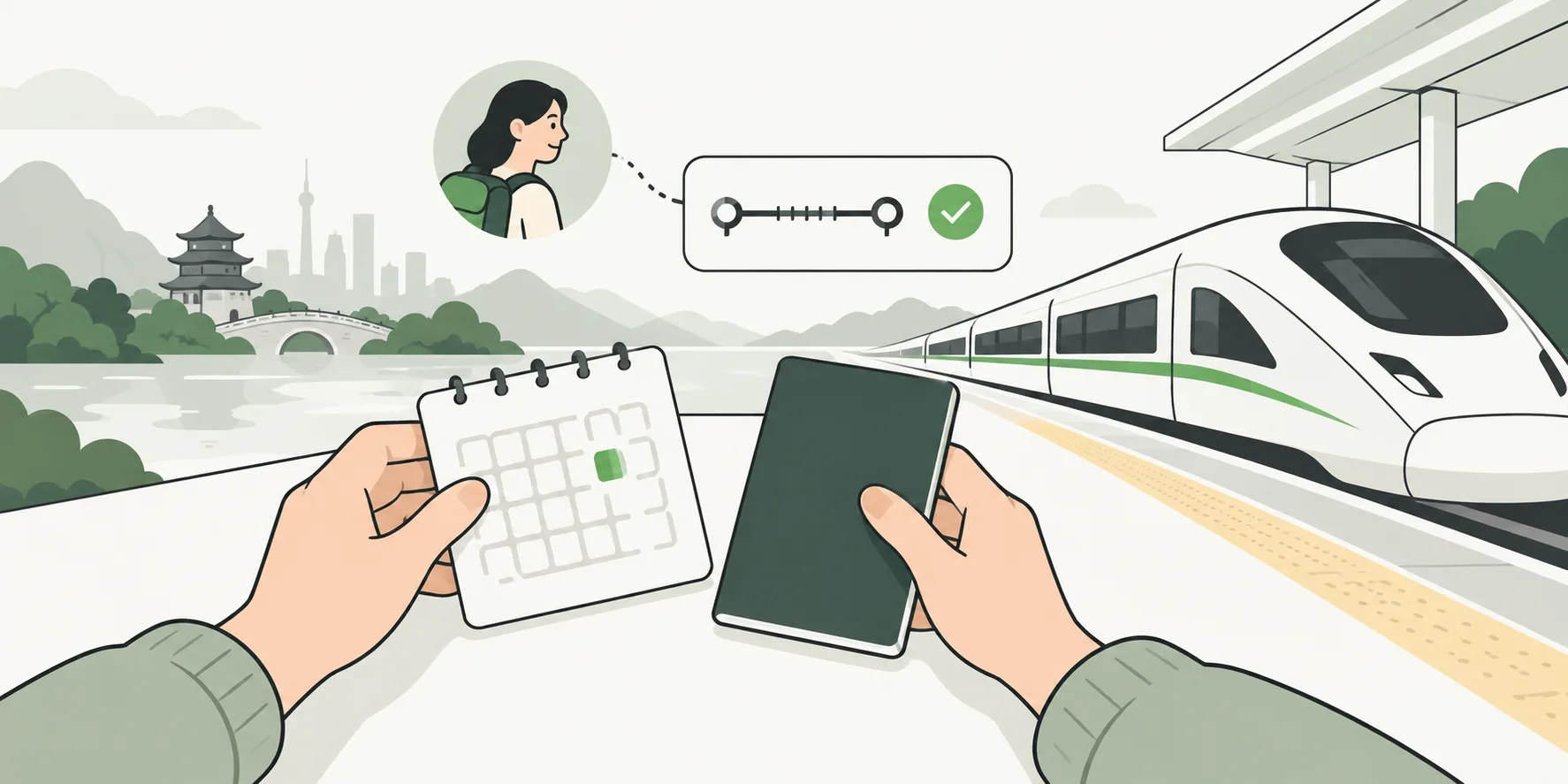
Illustrative booking preparation: confirm the station, passenger identity and issued-ticket status before making onward plans.
Prepare the passenger identity
Ask Buddy ↗Foreign visitors can book with a supported passport through 12306's English website or app. Use the name, nationality, document type and number requested by the system, matching the original document you will carry.
Identity verification may be automatic or require document-photo review. If it fails, follow 12306's current correction or station-verification instructions. Avoid making inconsistent duplicate passenger records in an attempt to bypass the issue.
If the name-entry format is unclear, ask the platform before paying. A screenshot of your passport is useful for reference but does not replace the original travel document at the station.
Understand when you can buy
Ask Buddy ↗Ordinary railway ticket sales generally use a 15-day advance-sale window, with release times differing by train or station. Check the actual sale date and time in 12306.
There are exceptions and separate reservation products. Selected Beijing–Shanghai services have an official advance-reservation pilot, with its rules adjusted in September 2026. An earlier reservation window for a supported service is not a nationwide change to all ticket sales. Read the current product's date range, fulfilment and refund conditions.
Third-party platforms may also accept requests before ordinary sales open. Distinguish:
| Order state | What it establishes |
|---|---|
| Journey found or price displayed | A search result, not a reservation |
| Advance request or waiting-list submission | An attempt governed by that product's conditions |
| Issued ticket / confirmed successful purchase | A specific booked journey; check every passenger and seat |
If a platform says it will try to buy later, check when you will learn the outcome and how an unsuccessful request is refunded.
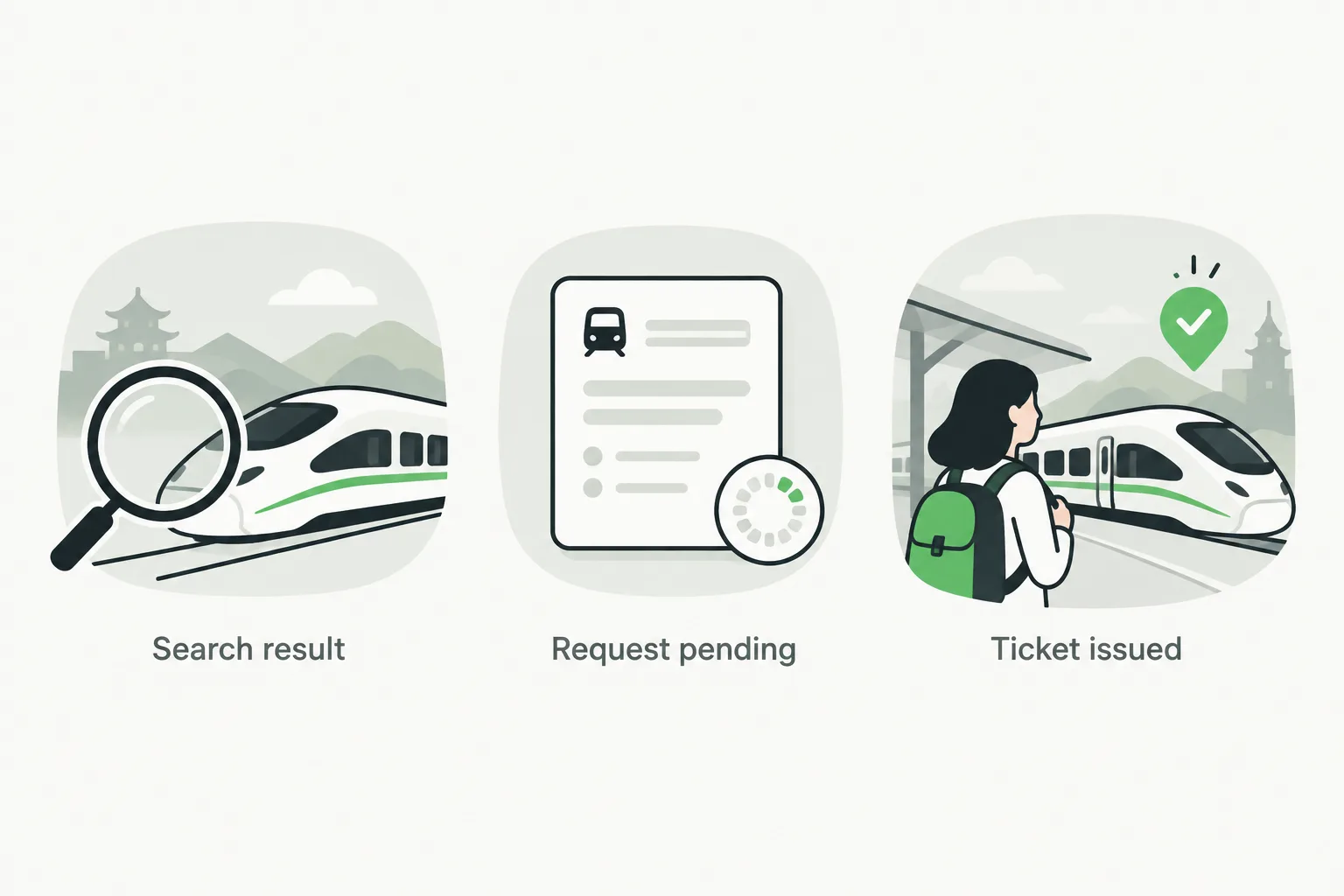
Three distinct booking states: search result, pending request and issued ticket. Only a successfully issued booking establishes the reserved journey; a request does not guarantee fulfilment.
Review the order before paying
Ask Buddy ↗Check the train number, date, stations, passenger identity, seat class and total. Understand any intermediary fee and which company will handle changes.
After payment, open the order again and find the issued status. Save the train number, departure time, coach and seat information if assigned, and the booking reference. A payment receipt alone does not explain the current ticket status.
Children, passengers needing assistance and unusual document situations can have additional requirements. Use the operator's applicable instructions instead of assuming one adult's booking flow covers everyone.
Optional booking walkthrough by Lyn | China Travel Made Simple, using Trip.com rather than 12306 registration. Check current service fees and issued-ticket status in your own order; an advance request is not a confirmed seat.
Trip.com train-booking example, from 2:26Optional video · YouTube
YouTube may not load in mainland China. You can follow the written steps in this guide.
Ask BuddyIf the train is sold out
Ask Buddy ↗Consider a different departure time, seat class or route with enough connection time. Check the geography before selecting a similarly named station or a distant alternative city.
If your chosen channel offers a waiting list, read its payment, expiry and cancellation terms. Do not build a journey around a waitlist entry as though it is an issued ticket, or assume a paid add-on guarantees success.
Where the connection is essential, compare a flight or an extra hotel night before committing to dependent bookings. Avoid tight separate-ticket connections just because each leg appears in a search result.
Changes, refunds and missed trains
Ask Buddy ↗Use the channel holding your order and read the conditions for that specific ticket. Fees and available actions depend on timing, the original booking and the replacement journey. Check the final amount and new departure details before confirming a change.
If you miss a train, contact railway staff or the booking provider promptly. Available changes and costs depend on the rules that apply; do not assume you can board the next train using the old ticket. A missed first leg does not automatically rearrange separately purchased later travel.
For a cancelled or disrupted service, retain the official notice and ask about the applicable railway arrangements before buying a replacement. Do not cancel in a hurry without understanding whether a disruption-specific process applies.
Sources
- China Railway: official booking service.
- China Railway: changes and refunds.
- Hunan government: passport booking and identity verification.
- Beijing: ordinary ticket-sale window and holiday exceptions.
- Beijing: September 2026 changes to the selected-route reservation pilot.
- Optional walkthrough: Trip.com train-booking walkthrough, by Lyn | China Travel Made Simple.