 ChinaBuddy
Packing for China: Luggage, Power Banks, Medicines and Purchases
Pack for China flights, trains and the journey home, with current power-bank checks, medicines, luggage allowances and customs preparation.
IN THIS GUIDE
Check your bag against three separate sets of requirements: the airline or railway carrying it, mainland China's entry or exit rules, and the rules at your onward destination. An item accepted on one leg is not automatically accepted on the next.
Pack your original travel documents, necessary medication, essential contacts and a payment backup where you can reach them. Keep valuables and anything needed for the next check accessible.
Read the allowance for the actual ticket
Ask Buddy ↗For a flight, check the operating carrier, fare, cabin-bag dimensions and weight, checked allowance and any special-item procedure. For a train, check the railway's luggage and restricted-item rules instead of applying an airline allowance.
A package or connection may contain more than one operator and different conditions. Check each leg, particularly a domestic flight after an international arrival. Additional baggage fees and the ability to transport a large item should be confirmed before purchase or departure.
If you are using an airport rail line or metro to reach the terminal, consider whether you can manage the bags through its gates, elevators and final walk as well.
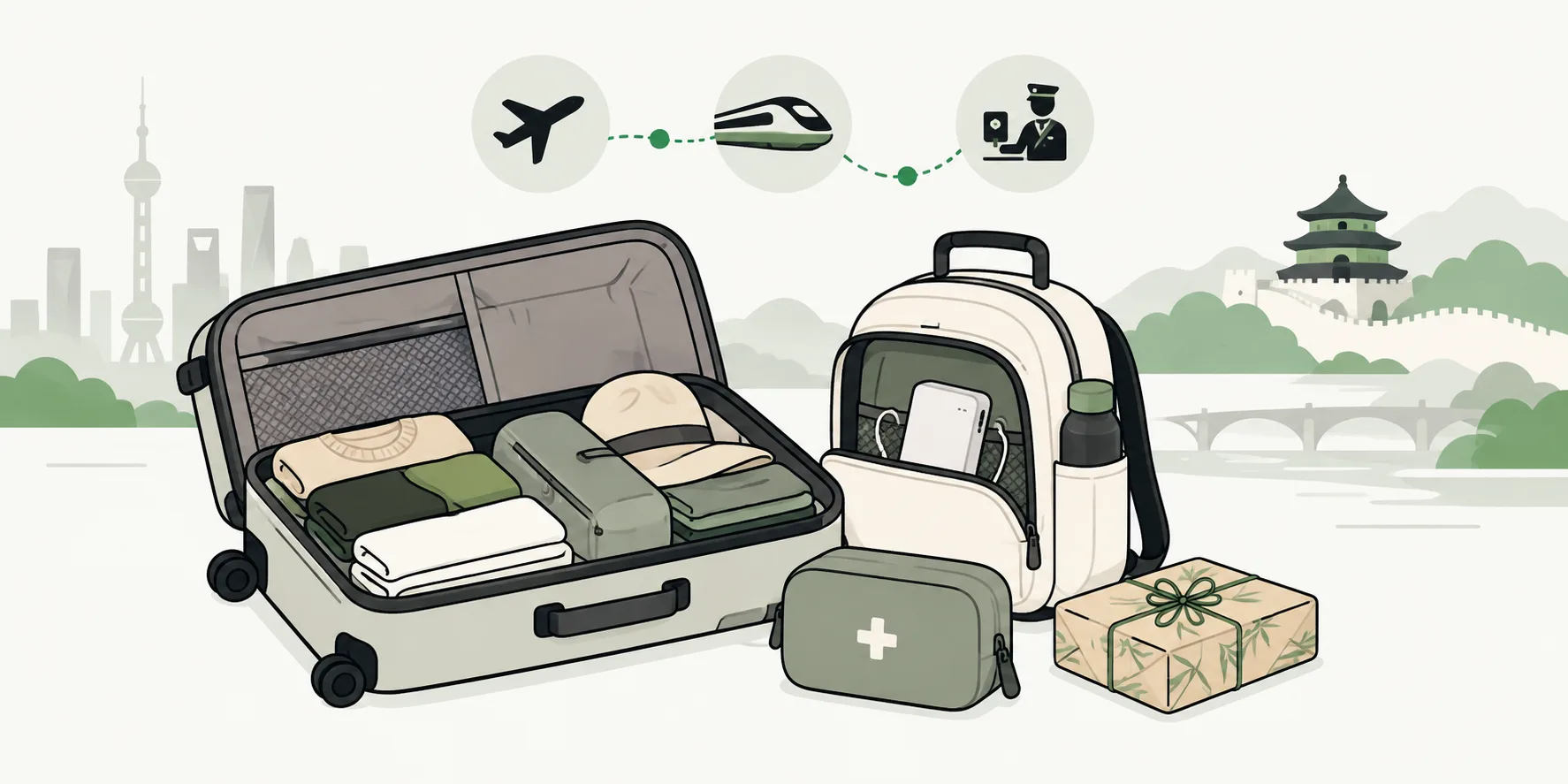
Illustrative packing: check each transport operator and border rule separately, and keep power banks out of checked baggage.
Power banks need a current check
Ask Buddy ↗For mainland domestic flights, CAAC prohibits power banks without a clear CCC marking and power banks from recalled models or batches. A familiar brand or a device accepted on the inbound international flight does not override this requirement.
Keep permitted power banks and spare lithium batteries in cabin baggage, not checked luggage. Protect them from damage or short circuits and follow the carrier's capacity, approval and storage instructions.
International specifications changed in March 2026 to limit power banks to two per passenger and prohibit recharging the power bank during flight. Carrier and national requirements can be more restrictive. Check the current operating airline's rules on quantity, energy rating and use; do not rely on an older unlimited-small-batteries packing list.
If you cannot establish that a device meets the applicable requirements, ask the carrier before travelling with it. Do not alter a label, hide the device or treat an online seller's assurance as certification.
Liquids, sharp objects and aerosols
Ask Buddy ↗Check the current security list for the actual transport mode and route. Toiletries, sprays, alcohol, tools and sharp objects may have container, quantity or carriage restrictions. Airport and railway rules are not identical.
Do not assume an item is allowed on a mainland domestic flight merely because it fits an international liquid-bag convention, or that a restricted cabin item can always be checked. Some items are prohibited entirely or need advance approval.
Check medically necessary liquids and equipment with the operator in advance and retain the supporting information it requests.
Medicines and medical equipment
Ask Buddy ↗Consult your clinician about supplies and the trip's medical needs. Keep medicines identifiable in original packaging where practical, together with the prescription or letter showing generic names and prescribed use. Check entry, transit and return-country rules for controlled medicines and medical products.
A prescription in your home country does not establish permission to carry a medicine through every border. Ask the relevant customs or embassy and operator when the status is unclear, particularly for controlled substances, injections or specialist equipment.
Keep essential treatment accessible in the quantities and conditions agreed with your clinician. If baggage is delayed, having the medicine only in a checked suitcase can create a separate problem.
Purchases and the journey home
Ask Buddy ↗Before buying food, plants, animal-derived products, a potentially controlled cultural item or a large battery, check both export and destination import requirements. The rule is based on what you carry and where you enter; your nationality alone does not answer it.
Keep receipts and descriptions of valuable or unusual purchases. If claiming a departure tax refund, keep the goods and required records available for the applicable validation or inspection before they become inaccessible in checked baggage.
For fragile souvenirs, establish how they will be packed, carried or shipped and what insurance or liability terms apply. A shop's protective wrapping does not guarantee airline or courier compensation.
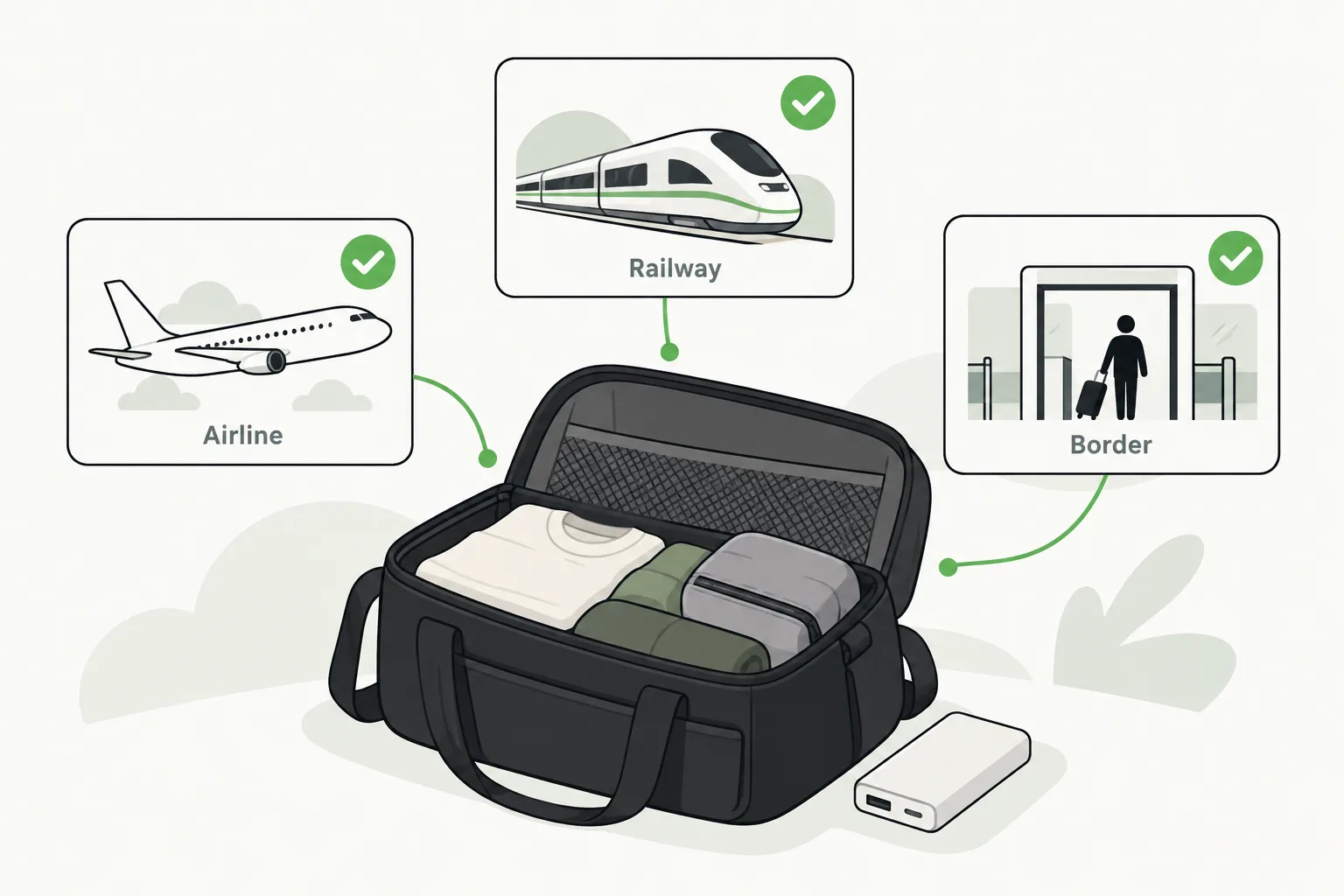
Three independent packing checks: airline, railway and border requirements. Permission under one set of rules does not establish permission for the next leg.
Pack in three groups
Ask Buddy ↗| Group | Keep here |
|---|---|
| Accessible throughout the journey | Original documents, necessary medication, phone, payment backup and booking details |
| Available for the next inspection | Items and records that customs, security or a refund process may need |
| Ordinary permitted baggage | Clothes and other allowed items within the applicable allowance |
Repack after shopping and before changing transport modes. A bag that worked for the inbound flight may need to be rearranged for a train or a domestic departure.
Sources
- CAAC: mainland domestic-flight CCC and recalled-device restrictions.
- ICAO: power-bank quantity and in-flight recharging changes.
- IATA: passenger battery-safety guidance.
- National Railway Administration: prohibited and restricted railway items.
- Shanghai Customs: questions about goods and medicines.
- FCDO: travelling to China with medication.