 ChinaBuddy
Everyday Travel Essentials in China: Toilets, Water and Luggage Storage
Find toilets, drinking water, luggage storage and charging help in China, with useful Chinese phrases and offline preparation.
IN THIS GUIDE
Keep a small day bag with tissues, a usable payment method, necessary medication and your saved hotel address. For toilets, drinking water, storage or charging, search for the actual facility and confirm that it is open and usable; a nearby map symbol may be inside a closed building or beyond a ticket gate.
This guide groups the small practical questions that often interrupt a sightseeing day. Use the relevant section when you need it.
Find a toilet and the access you need
Ask Buddy ↗Useful search terms are 厕所, 卫生间 and 公共厕所. You may find facilities in public areas, shopping centres, transport hubs or attractions, subject to the building's access and opening arrangements.
Some locations have sitting toilets, squat toilets or a mixture. Carry tissues and a way to clean your hands instead of assuming every cubicle has supplies.
| What you need | Chinese to show |
|---|---|
| Where is the toilet? | 请问卫生间在哪里? |
| Is there a sitting toilet? | 请问有坐便器吗? |
| An accessible toilet | 请问有无障碍卫生间吗? |
| A family toilet | 请问有家庭卫生间吗? |
A label does not confirm step-free access, working equipment or suitability for a particular mobility aid. Where access is important, ask the venue about the actual route and facility before a long outing.
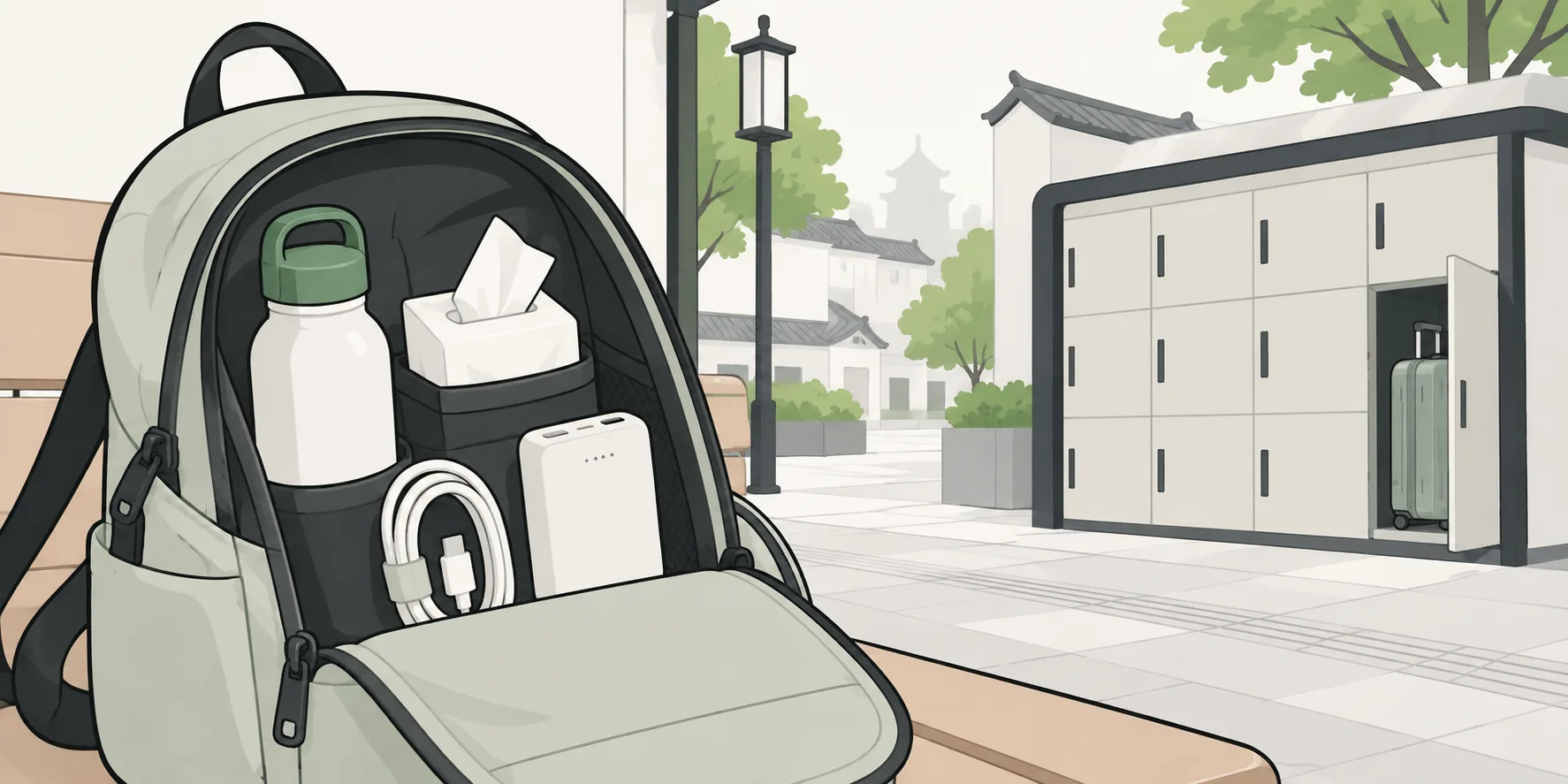
Illustrative daily preparation: carry the essentials you need between confirmed facilities and keep important details offline.
Drinking water and buying basics
Ask Buddy ↗Choose sealed bottled water or water explicitly provided for drinking. Do not assume water from a washbasin is suitable to drink. At a dispenser, check the label and temperature; a hot-water outlet can cause burns.
Ask 哪里可以买饮用水? — “Where can I buy drinking water?” In a shop, check whether the displayed amount applies to one bottle, a multipack or another size.
Carry what you need before a long queue, a remote excursion or a journey with limited stops. Food or drink restrictions at a particular venue still apply; check its visitor instructions.
For medicines, ask a pharmacist and use the medical help guide. A convenience-store purchase is not a substitute for suitable medical care.
Store luggage without losing access to it
Ask Buddy ↗Search 行李寄存 for luggage storage. Possible providers include your accommodation, an airport or railway facility, and commercial services. Confirm that the location actually offers storage; a map category or an old review is not a booking.
Before handing over a bag, check:
- Opening hours and the latest collection time on your date.
- Exact location, including whether it is inside a paid or secure area.
- Bag size, prohibited contents and any identification requirement.
- Total charge and how it changes with the storage period.
- The receipt, locker credential or claim reference needed to retrieve it.
- The provider's terms for loss or damage.
Keep your passport, valuables, essential medication and anything needed for the next journey with you. Avoid putting the only copy of a locker-access credential inside the locker.
Ask 最晚几点可以取行李? — “What is the latest time I can collect the luggage?” Save the answer and allow time to return before onward travel.
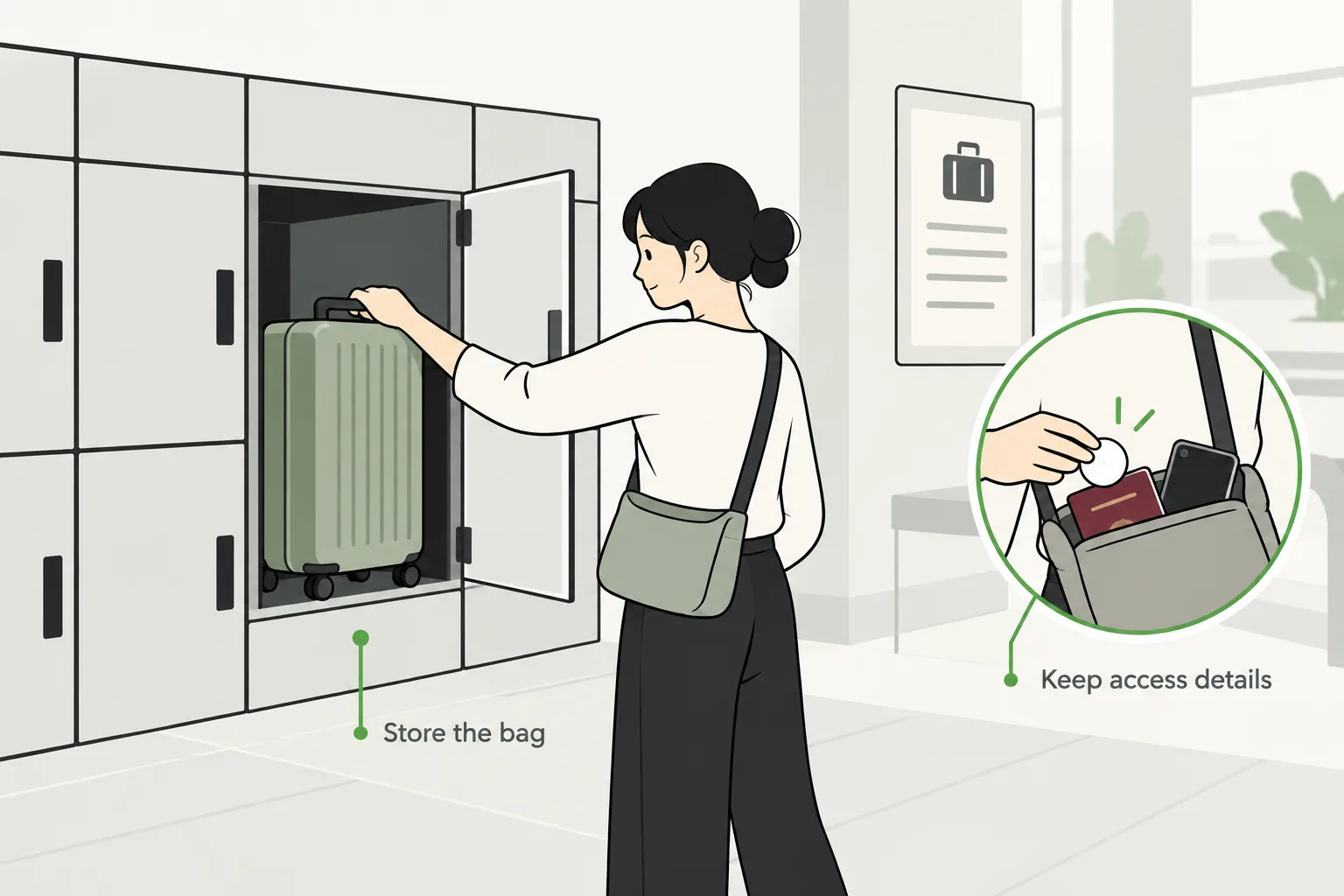
Illustrative storage: store the bag while keeping its access details, identity document and essential items with you. Confirm the latest collection time before leaving.
Charge the phone you rely on
Ask Buddy ↗Bring a suitable charging cable and check the requirements for any power bank on your air or rail journey. A rental charger can require an app, deposit or supported payment method; read the return and charging terms before unlocking it.
Keep enough battery to access transport tickets, contact the hotel and complete payments. Download your essential information in advance. If you use a public charging facility, retain control of your device and avoid approving unexplained data-access prompts.
The packing guide explains why aviation power-bank rules need a separate check from railway rules.
Prepare for getting separated
Ask Buddy ↗Agree on a specific meeting point and a way to contact each other if mobile data or a phone fails. “The main entrance” can be ambiguous at a large station or attraction; use a named gate, exit or staffed landmark.
Keep the hotel's Chinese address and a trusted contact available to everyone who needs it. For a child or vulnerable traveller, plan suitable supervision and a safe way to show contact information without exposing it publicly.
If someone is missing or in immediate danger, seek help from official venue staff or local emergency services promptly. Do not rely solely on the other person's live location updating.