 ChinaBuddy
Medical Help in China: Emergencies, Hospitals and Pharmacies
Find medical help in mainland China, call an ambulance, prepare Chinese location details, contact insurance and keep treatment records.
IN THIS GUIDE
For a suspected life-threatening medical emergency in mainland China, call 120 for an ambulance or ask someone nearby to call and explain the location. Seek urgent help first; do not wait for an app reply or insurance paperwork.
For a non-emergency problem, identify a facility that provides the care you need, confirm how to register and pay, and contact your insurer when relevant. This guide explains access and preparation, not diagnosis or a treatment plan.
Give a location people can find
Ask Buddy ↗Save your hotel's Chinese name, full address, reception number and room number. Outside the hotel, identify a building entrance, station exit or other precise meeting point. A location pin can help, but it should accompany a written place name.
Show or say:
我需要急救,请帮我拨打120。
“I need emergency medical help. Please help me call 120.”
我的位置是:……。请到……入口。
“My location is … . Please come to the … entrance.”
Ask a companion, hotel employee or nearby staff member to help communicate if needed. English-language assistance varies; prepare short written information rather than relying on a long phone conversation in English.
Distinguish emergency care from an appointment
Ask Buddy ↗急诊 means emergency department; 门诊 means outpatient services; 药房 means pharmacy. A hospital's appointment route is not necessarily its emergency entrance.
For an urgent problem, follow emergency-service instructions. For planned or non-emergency care, confirm the appropriate department, opening arrangements, registration method and whether foreign-passport registration can be completed online or needs a staffed desk.
Do not choose care solely because a map listing has a high rating or an English name. Check that the provider can handle your problem. Your insurer may help identify a suitable facility, but urgent help should not be delayed while waiting for routine approval.
Prepare the information clinicians need
Ask Buddy ↗If available, bring:
- Your original passport or other available identification.
- The start time and progression of the problem, described simply.
- A list of medications with generic names and doses as prescribed.
- Allergies, important medical conditions and relevant records.
- Insurance and assistance contact details.
- A payment method and a companion or interpreter where useful.
Do not publish passport or medical details to an open forum to find help. Share them through the provider's or insurer's appropriate channel.
A translation app can assist communication but can make errors with symptoms, doses and drug names. Ask staff to verify important information; request a professional interpreter or other suitable assistance where necessary.
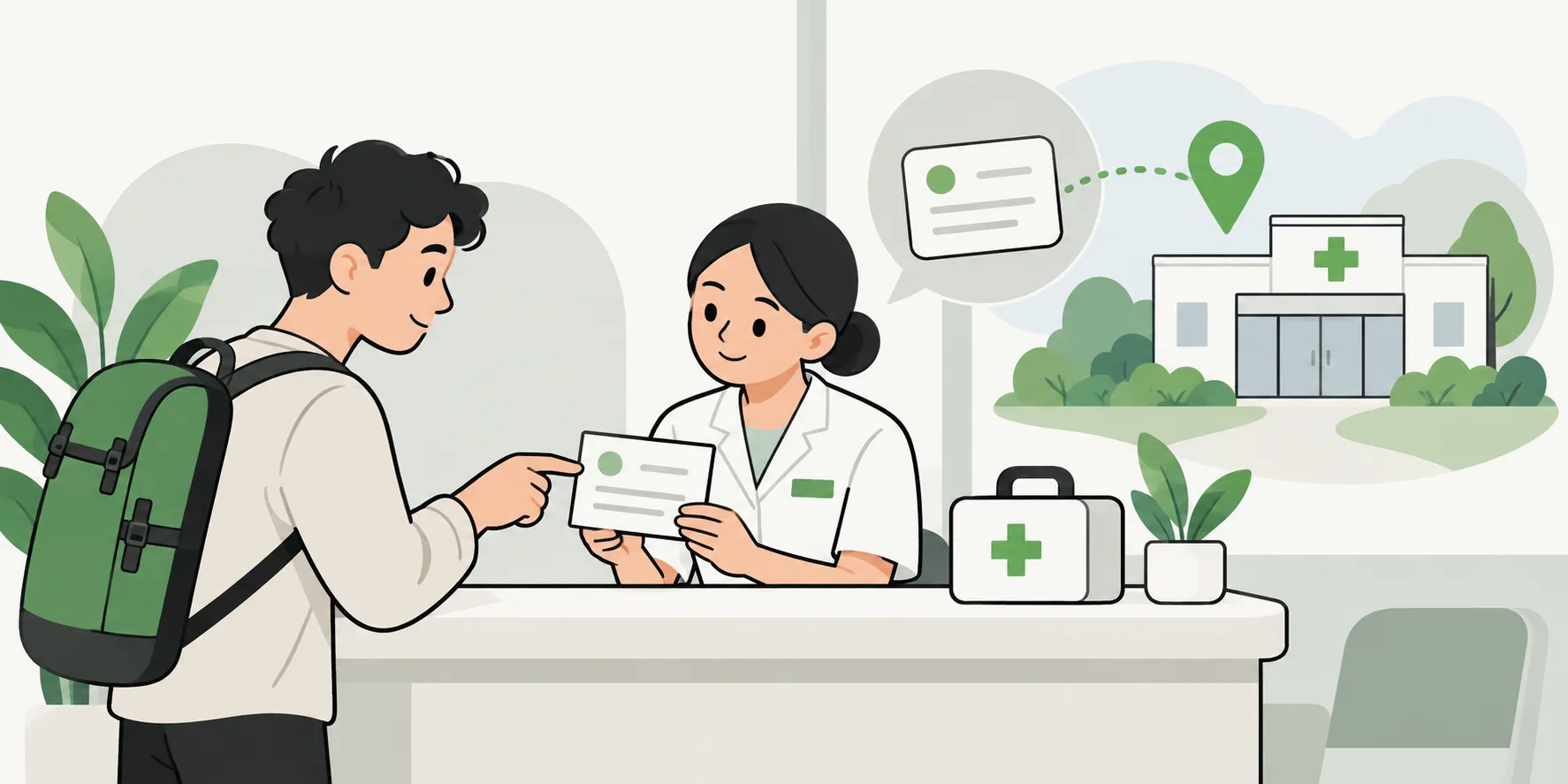
Illustrative preparation: keep your location, medicines, allergies and insurance contact available to show a clinician.
Check payment and insurance arrangements
Ask Buddy ↗Medical providers may require payment or a deposit, and a facility's acceptance of an insurance card does not automatically establish direct billing or coverage for your treatment.
Ask the insurer about authorisation, any approved provider route and the records required for a claim. Ask the facility to explain payment arrangements and whether an estimate is available for planned care. Keep invoices, itemised bills, medical reports and payment records.
Tell staff promptly if you cannot use their registration or payment app. A failed foreign-card payment is a separate issue from deciding what medical care is needed.
Using a pharmacy
Ask Buddy ↗For a minor non-emergency concern, a qualified pharmacist may explain available products and when you should see a clinician. Show the generic medicine name, your relevant conditions and other medicines. Do not assume an unfamiliar brand has the same ingredients or strength as a product from home.
Do not substitute a prescription medicine, combine unfamiliar treatments or use antibiotics on the strength of an app translation. Follow a clinician's or pharmacist's advice for your circumstances.
If a medicine you need is unavailable, contact a suitable clinician and your insurer or usual prescriber. The legal status and availability of medicines differ between countries. Check import requirements before travel instead of relying on being able to replace everything locally.
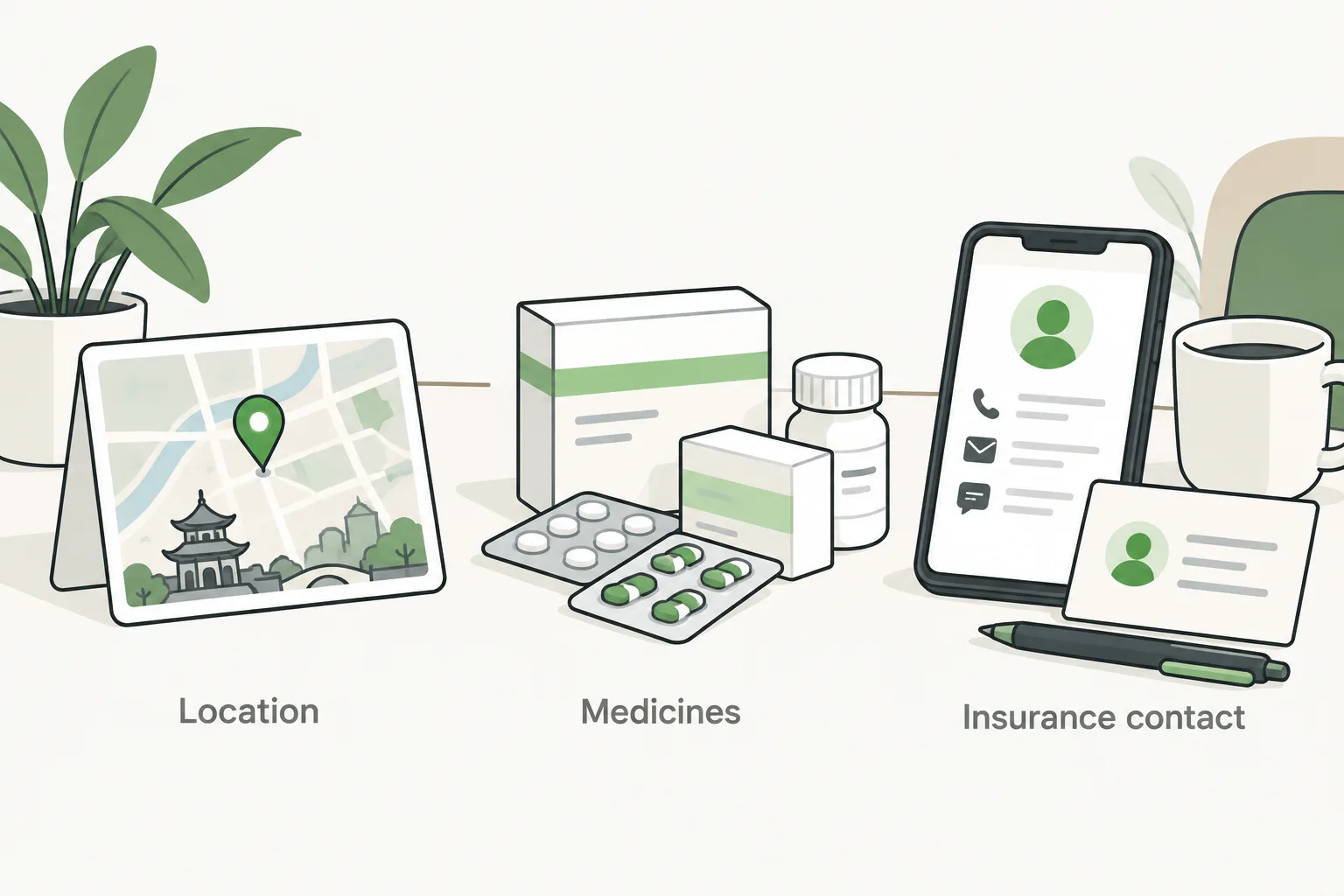
Illustrative preparation: keep your precise location, medicine information and insurance contact accessible. In a life-threatening emergency, seek urgent help first rather than waiting for paperwork.
Prepare before the trip
Ask Buddy ↗Arrange insurance appropriate to your itinerary and medical circumstances. Consult your own clinician about existing conditions, medication and destination-specific health preparation well before departure.
Save an offline health note and give a trusted companion access to essential assistance information. Keep prescribed emergency medication accessible according to your clinician's instructions, with the documents needed for transport and entry.