 ChinaBuddy
Food Allergies, Vegetarian and Halal Requirements in China
Explain food allergies, vegetarian, vegan and halal requirements in China, check ingredients and preparation, and prepare useful Chinese phrases.
IN THIS GUIDE
Explain the specific ingredients and preparation conditions you need before ordering. A dish name, translated menu, vegetarian-looking photograph or restaurant rating cannot establish that a meal meets an allergy or religious requirement.
If your allergy can be serious, plan with your clinician before travel, carry the prescribed emergency treatment and instructions, and prepare a clear Chinese explanation. If the restaurant cannot reliably confirm the conditions you need, choose another meal or venue.
Distinguish allergy from preference
Ask Buddy ↗“I do not eat this” and “this can cause a serious allergic reaction” convey different information. A request for less chilli does not explain an allergy, and an intolerance should not automatically be described as the same medical condition as an allergy.
For an allergy, show a personalised note checked by someone competent in both languages. Include the exact allergen, the need to check sauces and ingredients, and any cross-contact requirements advised for you. Tell staff that you need the kitchen to confirm the information, not just recognise a translated word.
Example to adapt and verify for your condition:
我对花生过敏,吃了可能会有严重反应。请帮我确认食材、酱料和制作过程。
“I am allergic to peanuts and eating them may cause a serious reaction. Please help confirm the ingredients, sauces and preparation.”
Do not use that example unchanged for a different allergen.
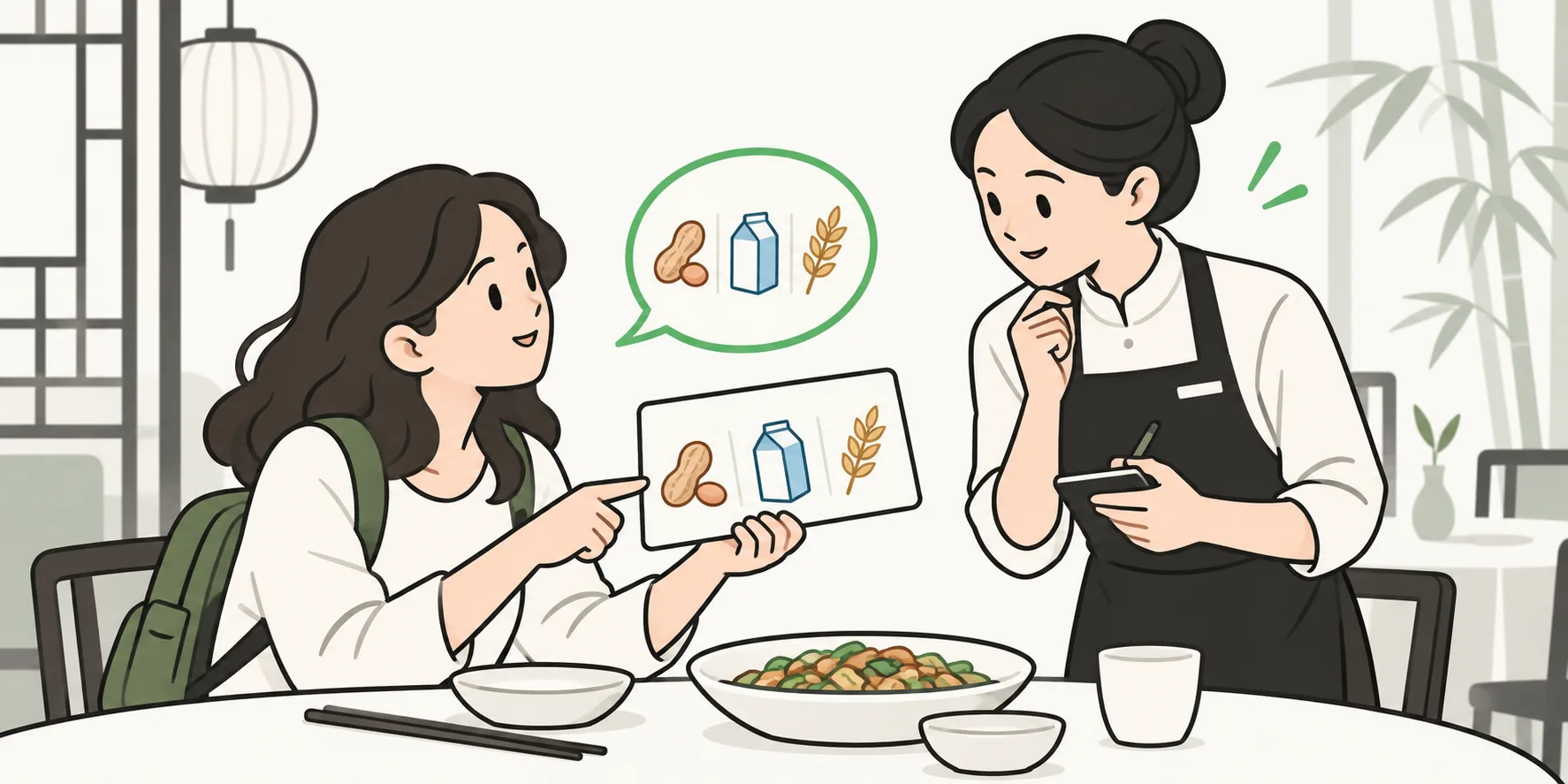
Illustrative communication: describe the specific ingredients and cross-contact concern; this image does not certify any dish as safe.
Make the ingredient explicit
Ask Buddy ↗| Ingredient or restriction | Useful Chinese |
|---|---|
| Peanuts | 花生 |
| Tree nuts | 坚果 — list your particular nuts as well |
| Milk / dairy products | 牛奶/乳制品 |
| Eggs | 鸡蛋 |
| Sesame | 芝麻 |
| Prawns and crab | 虾和蟹 — specify the shellfish relevant to you |
| Wheat | 小麦 |
| No meat, fish or seafood | 不吃肉、鱼和海鲜 |
This table is vocabulary, not a complete medical translation card. Different allergies and dietary rules require different exclusions. For example, avoiding wheat is not by itself a complete explanation of every gluten-related requirement.
Ask about broths, sauces, fillings, oils, garnishes and shared preparation where these matter to your condition. A visible main ingredient does not describe everything used in cooking.
Vegetarian and vegan meals
Ask Buddy ↗Explain what you exclude. “Vegetarian” can be interpreted differently by different people, and a vegetable dish alone does not answer questions about stock, animal fat, egg or dairy.
For an appropriate vegetarian request, you might show:
我不吃肉、鱼、海鲜、肉汤或动物油。请帮我确认这道菜的食材和酱料。
“I do not eat meat, fish, seafood, meat stock or animal fat. Please help check the ingredients and sauces in this dish.”
If you also exclude eggs and dairy, state that separately: 我也不吃蛋和奶制品。 If your requirements differ, edit the wording rather than relying on a label that only partly describes them.
A specialist restaurant can make the conversation easier, but still confirm the particular dish and your own requirements. Map categories and review tags are not a substitute for that check.
Halal requirements
Ask Buddy ↗The word 清真 is useful when searching or asking about halal food. Establish the evidence and preparation practices that meet your own religious requirements. A translated map label or the absence of pork in a dish does not settle sourcing, cooking or other conditions.
You can ask: 请问可以介绍一下清真认证和食材来源吗? — “Could you explain the halal certification and ingredient sourcing?”
Discuss alcohol and shared preparation if those matter to your practice. Confirm with the venue or relevant trusted authority; this guide does not certify restaurants or meals.
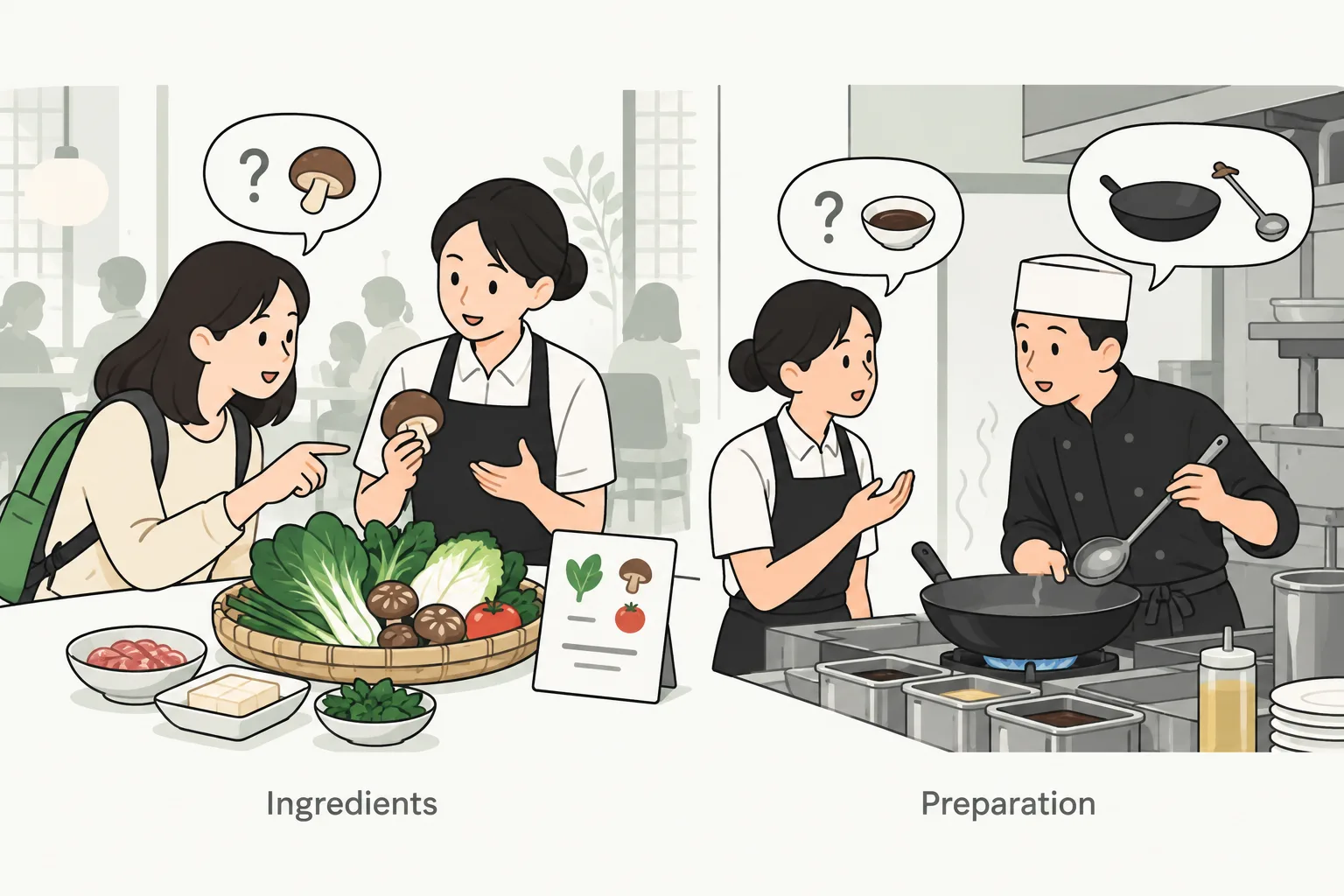
Two parts of the dietary conversation: ingredients and preparation. Confirm both for your specific needs; neither a dish name nor this illustration certifies a meal as suitable.
Use translation tools as a conversation aid
Ask Buddy ↗Show the original menu and the Chinese note to staff, then ask for confirmation from the person who can check the kitchen. A quick nod, an automatic translation or an English dish title may be insufficient for a consequential decision.
If staff cannot understand or confirm the request, do not press them into giving a reassurance they cannot support. Keep another dining option and suitable packaged food where its ingredients can be checked for your needs.
If a serious allergic reaction is suspected
Ask Buddy ↗Difficulty breathing, sudden throat or tongue swelling, or collapse can indicate a serious reaction. Follow your prescribed emergency plan and seek urgent medical help. In mainland China, call 120 for an ambulance, or ask someone nearby to call and explain your location.
Do not wait for a restaurant dispute or a chat response before seeking help. Read the medical help guide and save the relevant information before travelling.